Auris Berne
Our Berne branch
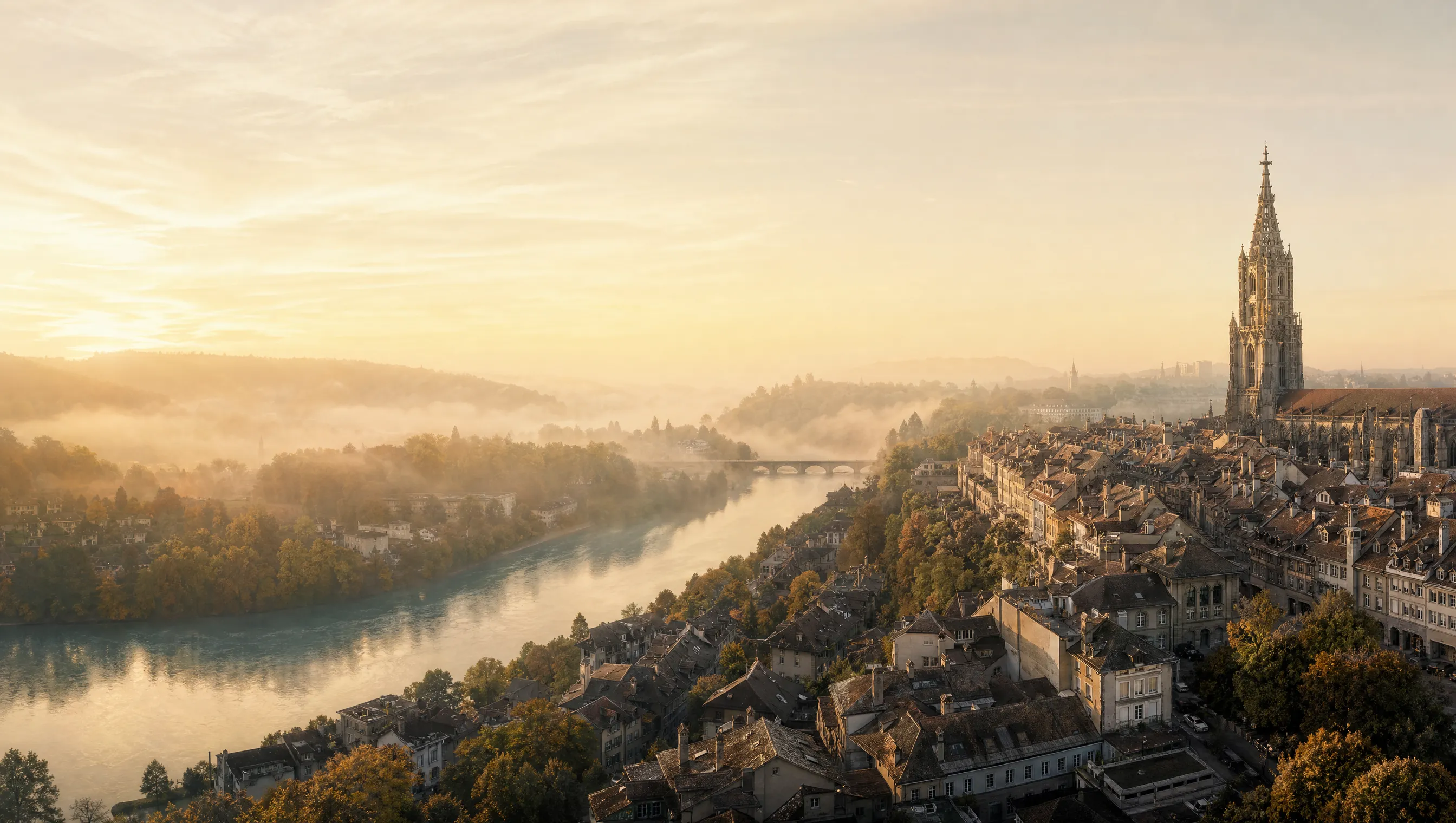
Bern combines the advantages of Switzerland’s federal capital with an exceptionally high quality of life, a stable and diverse economy, and a relaxed, family-friendly living environment. The city is home to the Federal Parliament, government and administration, as well as international organisations, diplomatic missions, major Swiss employers and a strong research community. Our local team combines detailed market knowledge with established contacts across Bern, its surrounding municipalities and the wider canton.
Our Bern branch provides coordinated destination and relocation support for corporate transferees, executives and their families relocating to Bern and the surrounding region. Our experienced local consultants offer practical, market-specific guidance with immigration support, area orientation, home search, education and childcare options, local registration and settling-in services—helping newcomers establish themselves smoothly in a well-connected city known for its cultural heritage, access to nature and balanced pace of life. Bern’s wider economy has particular strengths in public administration, healthcare, IT, communications, transport, research and services.
Your team in Berne

Adrian von Moos
Regional Director

Lilian Gall
Relocation Consultant
Billie McCormack
Relocation Consultant
Area covered
Bern canton, Solothurn, German-speaking part of Valais
Cantons: BE · SO · Upper ValaisValais: areas shown by district. ©swisstopo
Location profile
The Bern region combines the advantages of Switzerland’s federal capital with a high-quality, well-balanced residential environment. It offers a distinctive mix of historic urban life, vibrant neighborhoods, family-friendly suburbs, rural communities and easy access to lakes, rivers, forests and the Bernese Alps.
Bern is centrally located between the German- and French-speaking parts of Switzerland. The wider region includes the City of Bern, the surrounding agglomeration, the Seeland area, the bilingual city of Biel/Bienne, the Emmental, the Bernese Oberland and a broad network of smaller towns and villages. This variety gives internationally mobile employees and their families a wide choice of living environments, from central city apartments to spacious homes in well-connected residential communities or quieter rural settings.
As Switzerland’s federal city, Bern is home to the Federal Parliament, the Federal Council, key federal institutions, diplomatic missions and international organizations. The city combines political and administrative importance with a relaxed pace of life, strong local identity and direct access to nature.
Business environment
Bern has a stable, diverse and internationally connected economy. The region is particularly strong in public administration, healthcare, life sciences, medical technology, information and communication technology, precision engineering, advanced manufacturing, energy, transport, education, research and professional services.
The city’s role as the federal capital makes it an important location for government bodies, public institutions, associations, regulated industries and national organizations. At the same time, the wider canton has a broad industrial base, and is regarded as Switzerland’s leading industrial canton.
The region’s appeal is reinforced by a highly educated and multilingual workforce, internationally recognized research institutions and a strong healthcare ecosystem. The University of Bern is a comprehensive university with eight faculties and around 150 institutes, while its research priorities include sustainability, health and medicine, politics and administration, matter and the universe, and intercultural knowledge.
For international companies and their employees, the Bern region offers a broad range of business locations: the City of Bern for public-sector functions, headquarters, professional services, research and healthcare; Biel/Bienne for precision manufacturing, technology and bilingual business activity; the Bern agglomeration for services, logistics and industry; and the Bernese Oberland for tourism, hospitality and Alpine-related business sectors.
Living and quality of life
Bern offers an exceptional quality of life for professionals and families. Residents benefit from a compact and attractive city center, a UNESCO-listed old town, cultural institutions, restaurants, healthcare, sport and leisure facilities, while the River Aare, local forests, lakes and mountain destinations are readily accessible.
The city provides a particularly appealing balance between professional opportunity and everyday livability. Central neighborhoods offer urban convenience and short commuting distances, while surrounding municipalities provide more space, family-oriented communities and easy access to green areas. Many locations combine reliable public transport with a quieter residential character than larger Swiss metropolitan areas.
Housing options range from historic city apartments and modern developments to family houses in suburban municipalities, traditional homes in smaller towns and rural properties in the surrounding countryside. Depending on workplace and lifestyle preference, residents can choose between city living, lakeside communities in the Seeland area, villages in the Emmental or communities with closer access to the Bernese Oberland.
The region is known for its safety, high-quality healthcare, excellent education, cultural depth and strong community life. Bern’s central position also makes it easy to enjoy a wide range of Swiss destinations, while its slower pace and immediate access to nature are particularly valued by families and professionals seeking a sustainable long-term lifestyle.
Housing market
The Bern housing market is attractive and generally offers more variety than Switzerland’s largest metropolitan centers, although desirable properties remain competitive. Demand is strongest for well-located apartments in central Bern, modern family homes, properties near major public-transport connections and homes in sought-after suburban municipalities with convenient access to the city.
Early planning, realistic expectations and a complete application file remain important. The most competitive segments commonly include larger apartments, homes with outdoor space, renovated period properties and family-sized accommodation close to schools, childcare, rail connections or major employers.
The wider Bern region provides meaningful alternatives to central city living. Depending on an employee’s workplace, budget, household requirements and preferred lifestyle, suitable options may be found in the Bern agglomeration, along key S-Bahn corridors, in communities such as Köniz, Muri bei Bern, Ostermundigen, Ittigen or Belp, and in smaller towns or rural areas further from the city.
Auris provides locally informed guidance on neighborhoods and municipalities, commuting times, housing availability, rental practices, application requirements and the practical process of securing accommodation. This enables transferees to compare residential options carefully and make decisions that reflect both immediate relocation needs and longer-term family priorities.
Education and childcare
The Bern region offers a broad education landscape, including high-quality public schools, bilingual programs, private schools, country-specific schools and international school options. The appropriate choice depends on the family’s intended length of stay, children’s ages, language background, existing curriculum, educational continuity and preferred place of residence.
Public schooling in the German-speaking part of the canton is generally delivered in German, while French is used in the French-speaking Bernese Jura. The canton also has bilingual areas, particularly around Biel/Bienne, reflecting Bern’s role as a bridge canton between German- and French-speaking Switzerland. Schooling at elementary and secondary level is available in both German and French, alongside private alternatives.
Childcare, nursery provision and after-school care vary significantly by municipality, as do school structures, catchment areas, enrolment procedures, local timetables and availability. Early planning is especially important for younger children and families seeking particular school models, bilingual education or a preferred municipality.
Our consultants help families identify suitable residential areas, understand their available education and childcare options, coordinate school-search support and organize school or childcare visits as part of the wider relocation process. Bern’s strong university, research and healthcare environment is also a significant draw for internationally mobile professionals.
Language and integration
German is the principal language in Bern and most of the surrounding region, while Bernese Swiss German is the language commonly heard in informal everyday conversation. Standard German is used for written communication, education, administration and formal settings.
The canton of Bern is officially bilingual, with German and French both playing an important role. French is the principal language in the Bernese Jura, and bilingualism is especially visible in Biel/Bienne and certain surrounding areas. The canton actively promotes bilingualism and language exchange as a regional asset.
English is widely used in international organizations, research institutions, multinational companies, universities and expatriate and diplomatic communities, particularly in Bern city. Nevertheless, German remains highly valuable for administration, school communication, local relationships and long-term integration. Auris recommends that newcomers begin with Standard German, as it provides the strongest foundation for formal communication and daily life across most of the region.
For those living or working in bilingual areas, knowledge of French can also be a meaningful advantage and may broaden both social and professional opportunities.
Transport and connectivity
Bern benefits from an exceptionally well-integrated public transport network. Tram, bus, rail and S-Bahn services connect the city with surrounding municipalities, employment areas and regional centers, making commuting straightforward for residents throughout the agglomeration. The City of Bern describes its public-transport offer as extensive and modern, while regional providers operate within the Libero fare association.
Bern railway station is one of Switzerland’s principal rail hubs, providing fast and frequent links to Zürich, Basel, Lucerne, Lausanne, Geneva, Biel/Bienne, Interlaken and the Bernese Oberland. Zürich and Basel are generally reachable in around one hour, Lucerne in approximately 75 to 90 minutes, and Lausanne in around 60 to 90 minutes, depending on the selected service.
The regional S-Bahn network supports convenient commuting between the City of Bern and many residential communities, including locations towards Thun, Burgdorf, Biel/Bienne, Solothurn, Belp and the wider Bern-Mittelland area. This makes it practical for employees to combine city-based employment with suburban or rural living.
Road connections are also strong, with motorway access supporting travel towards Zürich, Basel, Lausanne, Geneva, the Bernese Oberland and neighboring countries. Bern Airport offers a limited range of regional and seasonal air services, while Zürich Airport, EuroAirport Basel and Geneva Airport are accessible by road and rail for broader international travel.
Frequently asked questions
Which areas are popular for living in the Bern region?
The right location depends on the workplace, household requirements, budget, preferred lifestyle and commuting priorities. The City of Bern offers a compact urban environment, short commuting distances, strong public-transport connections and easy access to cultural amenities, restaurants, parks and the River Aare. Popular residential districts include Kirchenfeld, Länggasse, Breitenrain, Mattenhof-Weissenbühl and the areas surrounding the old town.
Many transferees also consider the well-connected surrounding municipalities, including Köniz, Muri bei Bern, Gümligen, Ittigen, Ostermundigen, Worb and Belp. These locations may offer more space, family-oriented neighbourhoods, access to schools and childcare, and convenient rail or bus connections to the city. Auris helps transferees compare municipalities according to commute times, local amenities, housing availability, tax considerations, education options and lifestyle preferences.
How difficult is it to find housing in Bern?
Bern generally offers a broader choice of housing than Zürich or Geneva, but the market remains competitive for high-quality, well-located homes. Demand is especially strong for renovated apartments in central neighborhoods, larger family-sized properties, homes with outdoor space and accommodation close to railway stations, schools or major employment locations.
Thorough preparation, complete application documentation and flexibility on location, property type or move-in date can significantly improve the prospects of a successful search. Auris provides informed local market guidance, identifies suitable available and selected off-market opportunities, and supports clients throughout the process—from defining requirements and arranging viewings to preparing applications, negotiating terms and signing the lease.
How long does a home search usually take in Bern?
Timing depends on the preferred location, budget, household size, property requirements and availability at the time of the search. A focused search can sometimes be successful within a few weeks, particularly where the client has flexibility on municipality, property type and move-in date.
Families seeking larger homes, particular school catchment areas, a short commute or a preferred suburban location should allow additional time. Where an assignment start date is imminent, temporary accommodation is often advisable. It allows the family to become familiar with different neighbourhoods, experience daily commuting arrangements and make a well-informed long-term housing decision.
Do I need to register after moving to Bern?
Yes. New residents must register with the residents’ registration office in their municipality of residence after arrival. In the City of Bern, registration is handled through the Resident Services, Migration and Foreign Police office; procedures and timing may vary slightly between municipalities.
Where applicable, residence-permit formalities must also be completed within the relevant local timeframe. Requirements differ according to nationality, employment situation, family circumstances and municipality. Auris supports transferees with registration preparation, appointment coordination and the practical administrative steps required after arrival.
When should I arrange Swiss health insurance?
Anyone taking up residence in Switzerland is generally required to arrange Swiss basic health insurance. New residents normally have up to three months from the start of residence to obtain cover, which is generally applied retroactively to the date residence began. Residents must arrange health insurance within the first three months after entering Switzerland.
Certain exemptions or special arrangements may apply, including in some cases for international assignees retaining equivalent foreign cover. As eligibility depends on the individual assignment, nationality, employment arrangement and insurer, it is important to seek case-specific advice shortly after arrival.
What schooling and childcare options are available?
The Bern region offers a broad education landscape, including high-quality local public schools, bilingual programs, private schools and international-school options. The most suitable choice depends on a child’s age, language background, previous curriculum, anticipated duration of stay, need for educational continuity and the family’s preferred municipality.
Public schools in most of the Bern region teach in German, while French-language schooling is available in the French-speaking part of the canton and bilingual opportunities are particularly relevant around Biel/Bienne. The canton provides schooling at both compulsory and upper-secondary level in German and French, alongside private alternatives.
Childcare, nursery places and after-school care vary significantly by municipality, as do catchment areas, timetables, costs and availability. Auris helps families identify suitable residential areas, understand education and childcare options, coordinate school-search support and plan enrolment or school visits.
Is a car necessary in Bern?
In most cases, no. Bern and its surrounding municipalities are served by an extensive public-transport network of trams, buses, trains and S-Bahn services. This makes commuting, school travel and everyday family life manageable without a private vehicle, particularly for households living in the city or near a rail station.
A car may nevertheless be useful for households living in more rural areas, travelling regularly to locations outside the S-Bahn network, transporting young children, or planning frequent leisure travel to the mountains and countryside. Parking can be limited and costly in central Bern, so car ownership should be considered in relation to the selected residential location and daily travel needs.
Is English sufficient for everyday life in Bern?
English is widely used in international organizations, universities, research institutions, multinational companies and expatriate and diplomatic communities. It is often sufficient during the early stages of a relocation and for many professional interactions, particularly in the City of Bern.
However, German is highly valuable for local administration, school communication, healthcare appointments, everyday services and long-term integration. Bernese Swiss German is commonly spoken informally, while Standard German is used in writing, education and formal settings. Auris recommends that newcomers begin learning Standard German, which offers the best foundation for daily and professional life across most of the region.
How does waste disposal and recycling work in Bern?
Waste disposal is organized locally, so collection arrangements and fees depend on the municipality of residence. In the City of Bern, household waste collection follows published schedules, while separate disposal and recycling facilities are available for materials such as glass, metal, aluminum, paper, cardboard, PET bottles and batteries. The city operates two waste depots and a network of public collection points.
New residents should confirm the local collection days, permitted waste bags or stickers, recycling locations and disposal rules shortly after moving in. Incorrect disposal, leaving waste beside collection containers or using recycling points outside permitted hours can result in enforcement action or fines.
Auris explains the relevant local system as part of practical settling-in support, helping transferees establish efficient household routines from the outset.
What should I know about local taxes in the Bern region?
Swiss income tax is levied at federal, cantonal and municipal level, while wealth tax is cantonal and municipal. Church tax may also apply depending on an individual’s religious affiliation and circumstances. The total tax burden can therefore vary between municipalities, meaning that the choice of residence may affect both a household’s financial position and its daily commuting arrangements.
For internationally mobile employees, relevant considerations may include salary structure, family circumstances, nationality, residence status, tax-at-source arrangements and the interaction with assignment-related or cross-border tax advice. Auris can help transferees understand the practical implications of different residential locations and coordinate with specialist tax advisers where appropriate.
How do I open a Swiss bank account after arriving in Bern?
Swiss banks generally require personal identification, proof of Swiss address or local registration, confirmation of employment and information regarding nationality and tax residence. The exact documents and onboarding process can vary between institutions, especially for new arrivals who have not yet received their residence permit or permanent local address.
In many cases, a local bank account can only be opened after the client has completed municipal registration. Since employers commonly require a Swiss account for salary payments, it is advisable to begin the process early. Auris can provide practical guidance on documentation, appointment timing and the usual steps involved in setting up local banking arrangements.
What leisure opportunities are available in and around Bern?
Bern offers extensive year-round opportunities for culture, sport and outdoor recreation. Residents can enjoy the historic old town, museums, theatres, concert venues, restaurants, local markets and seasonal events, while the River Aare provides popular walking, running, swimming and cycling opportunities during the warmer months.
The surrounding region provides easy access to lakes, forests, countryside and mountain destinations. The Bernese Oberland, including Interlaken and the Jungfrau region, is readily accessible for hiking, skiing, snowboarding and family excursions. This combination of city life, cultural depth and close proximity to nature is one of the region’s principal attractions for internationally mobile professionals and families.
Talk to Adrian von Moos about your move to Berne.
An initial consultation clarifies scope, timeline and cost, directly with the local office.
Book an initial consultation with Adrian von MoosTrusted by clients on Google and by excellent feedback from corporate clients, Auris Relocation is proud to be ISO 27001, EcoVadis Silver and EuRA Global Quality Seal Plus certified.