Auris Neuchatel
Our Neuchatel branch
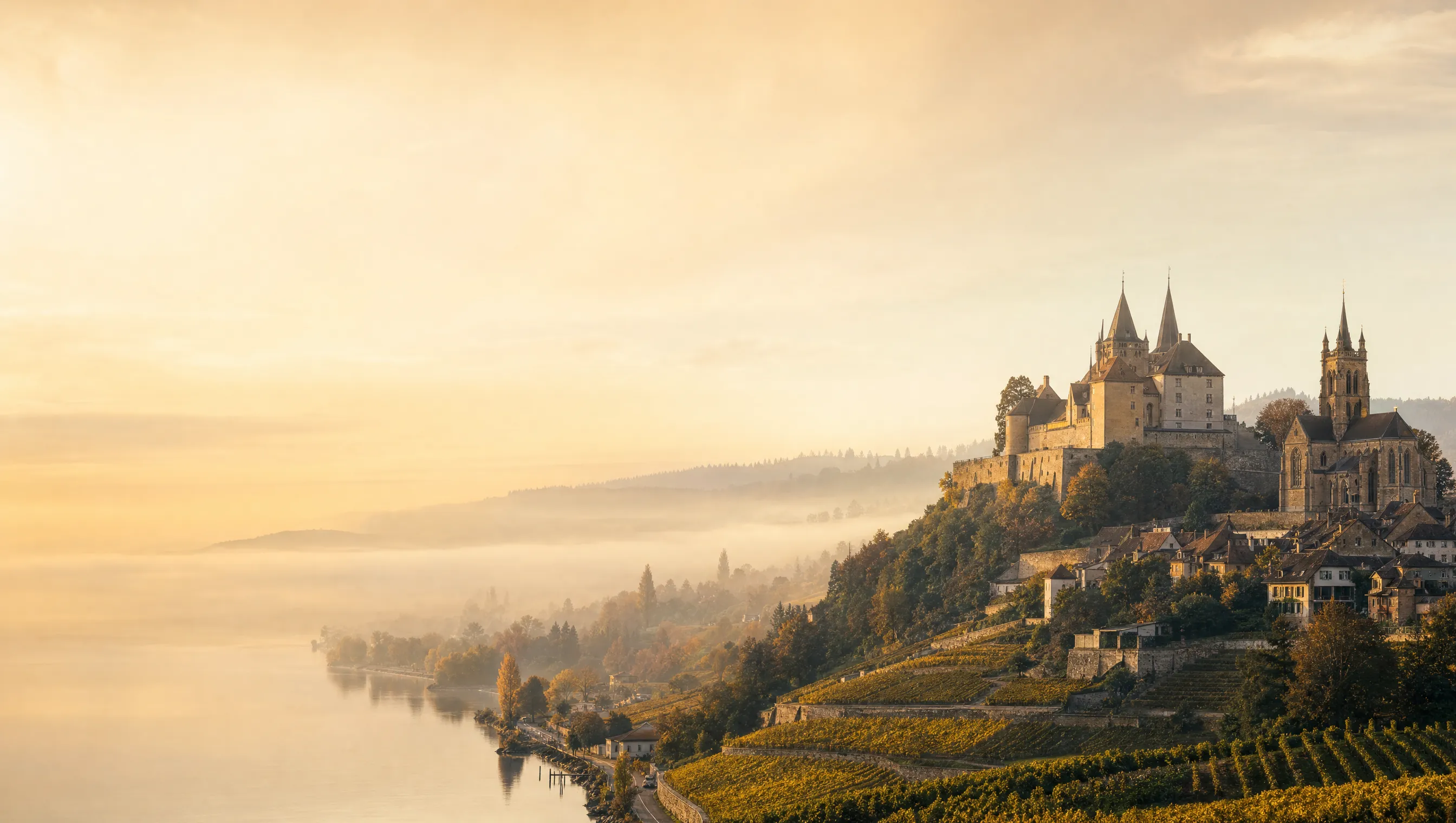
Neuchatel combines the character of a historic lakeside city with a globally recognized precision-technology and innovation ecosystem. Set between Lake Neuchatel and the Jura Mountains, the region offers an appealing French-speaking environment for international professionals, with a strong heritage in watchmaking, advanced manufacturing, microtechnology, medtech and research. The canton is home to leading institutions including CSEM, the University of Neuchatel, EPFL’s Microcity campus and HE-Arc, supporting close links between industry, education and applied innovation.
Our Neuchatel team delivers coordinated destination and relocation support across the city of Neuchatel, the canton and the wider Jura Arc. We assist corporate transferees, executives and their families with tailored immigration guidance, area orientation, home search, school and childcare options, local registration and settling-in services. With detailed local knowledge and established regional contacts, our consultants help clients identify the right location—from lakeside neighborhoods and family-friendly communities to the watchmaking centers of the Jura—and settle smoothly into one of Switzerland’s most distinctive high-technology regions.
Your team in Neuchatel
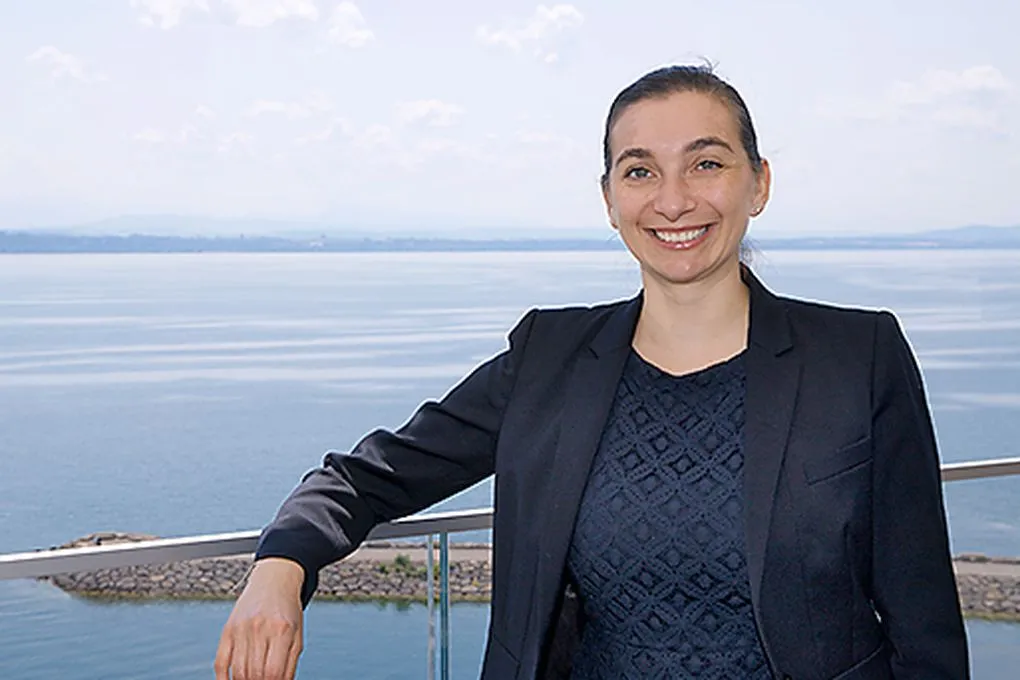
Sophie Colas
Regional Director

Valérie Emporio
Relocation Consultant
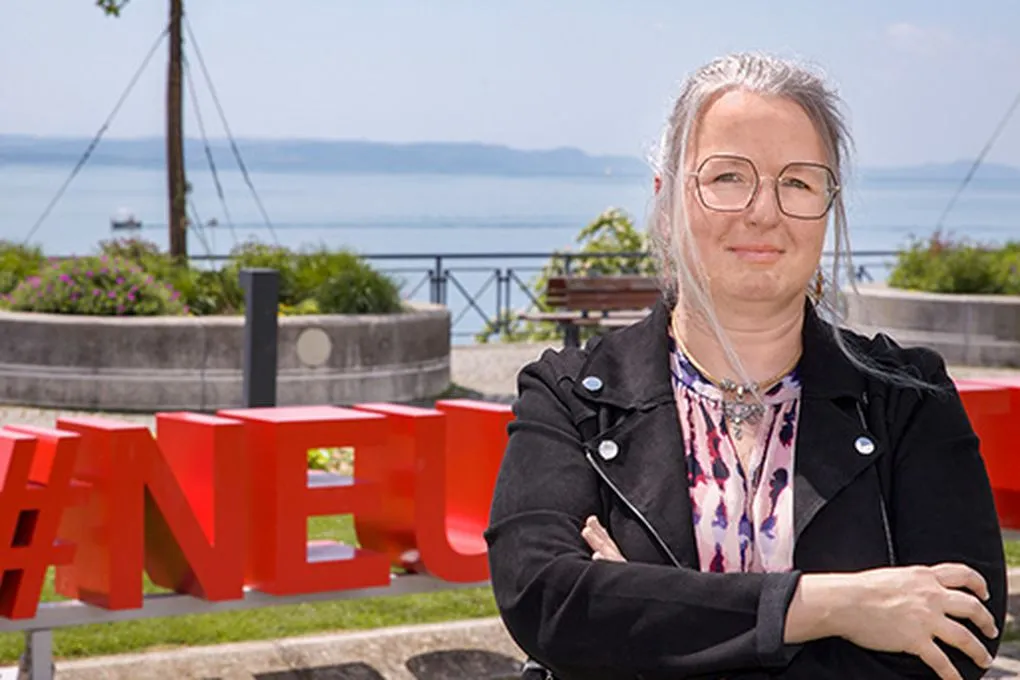
Barbara Haldi
Relocation Consultant

Adrian von Moos
Regional Director
Area covered
Lake Neuchatel
Cantons: NE©swisstopo
Location profile
Neuchatel is a distinctive French-speaking region in western Switzerland, centered on the historic lakeside city of Neuchatel and extending from the shores of Lake Neuchatel into the Jura Mountains and the watchmaking valleys. It offers an attractive balance between urban convenience, natural surroundings and a more personal, accessible scale than Switzerland’s larger metropolitan centers.
The canton provides a varied choice of residential settings. Neuchatel city, Peseux, Corcelles-Cormondrèche, Hauterive, Saint-Blaise and the lakeside communities offer proximity to the lake, local services and rail connections. Higher in the Jura, towns such as La Chaux-de-Fonds and Le Locle combine a strong industrial heritage with a cooler mountain climate, immediate access to nature and a distinctive architectural character. The Val-de-Ruz and other rural communities offer space, family-oriented living and practical links to the principal employment centers.
For internationally mobile employees, Neuchatel provides a highly livable environment: French-speaking, well connected, culturally rich and close to the wider economic centers of Bern, Fribourg, Biel/Bienne, Lausanne and the Lake Geneva region. Auris helps assignees understand the practical differences between lakeside, urban, rural and Jura locations, ensuring that the selected area aligns with work location, household needs, education plans, commuting requirements and individual lifestyle priorities.
Business environment
Neuchatel has a long-standing international reputation for precision, craftsmanship and industrial innovation. The region’s traditional watchmaking expertise has developed into a sophisticated ecosystem spanning microtechnology, precision engineering, electronics, automation, robotics, photonics, medtech and advanced manufacturing. The canton’s industrial base combines globally active companies with specialized SMEs, suppliers, research organizations and entrepreneurial ventures.
The area benefits from close cooperation between industry and education. Key institutions include the University of Neuchatel, CSEM, HE-Arc and the EPFL Microcity campus, which support research, engineering skills, innovation and technology transfer. Neuchatel’s concentration of expertise in watchmaking, microtechnology and thin-film technologies has helped create one of Europe’s densest photonics ecosystems.
The wider Jura Arc is also an important cross-cantonal and cross-border economic area. Employees may work in Neuchatel city, La Chaux-de-Fonds, Le Locle, Biel/Bienne, the Bern region, Fribourg or in specialist industrial and research locations across the Jura. Auris adds value by translating this complex regional geography into practical relocation choices, identifying residential areas that make sense not only for the employee’s workplace, but also for school needs, partner employment, transport access and longer-term lifestyle preferences.
Living and quality of life
Neuchatel offers a high quality of life in a relaxed and naturally attractive setting. The city combines a historic old town, lakefront promenades, cultural institutions, restaurants, healthcare services and everyday convenience with direct access to watersports, walking, cycling and mountain recreation. The Jura foothills and nearby nature reserves provide excellent opportunities for hiking, cross-country skiing and outdoor family life.
Residential choices range from central city apartments and lake-view homes to villages with gardens, rural properties and mountain-town accommodation. This variety can make Neuchatel particularly appealing to professionals and families seeking more space and a quieter daily rhythm without giving up access to quality services, education, public transport and international travel links.
The canton’s scale is a practical advantage: many destinations are close by, and residents can often achieve a better balance between commuting time, housing quality and leisure than in Switzerland’s larger cities. Auris supports clients in evaluating the full lifestyle picture—from access to shops, medical services and transport to outdoor opportunities, school journeys and the realities of winter travel in higher-altitude Jura locations.
Housing market
Compared with Switzerland’s largest urban centers, Neuchatel often offers a broader range of rental accommodation and potentially better value for space. However, the market is not uniform: well-maintained lakeside homes, family houses, properties with views, centrally located apartments and high-quality accommodation near key employment sites can still attract strong demand.
As of 1 June 2026, the canton recorded 1,656 vacant apartments, corresponding to a 1.64% vacancy rate. This indicates greater choice than in many highly constrained Swiss markets, but it does not remove the need for early planning and a well-prepared application for the most desirable properties.
Property requirements and rental procedures also vary by location. The lakeside area may appeal to employees based in Neuchatel city, while La Chaux-de-Fonds and Le Locle can be more practical for those working in the watchmaking and precision-engineering sector. Rural communities may offer larger homes and gardens, though a car can be more useful and commuting patterns need to be assessed carefully.
Auris provides independent, local market guidance throughout the home search: refining the brief, comparing neighborhoods and municipalities, assessing realistic commute times, identifying suitable available and selected off-market opportunities, coordinating viewings, preparing complete rental applications and reviewing lease arrangements. This hands-on support reduces uncertainty, saves valuable employee time and improves the likelihood of securing the right home efficiently.
Education and childcare
Families relocating to Neuchatel have access to French-language public schools, private education options, bilingual programs and selected international alternatives in the broader western-Swiss region. The most suitable solution depends on the child’s age, previous curriculum, French-language ability, anticipated duration of the assignment, future education plans and the family’s final residential address.
Public-school arrangements are organized locally and are usually connected to the municipality of residence. This means that school planning and housing strategy should be considered together from the start, especially for families requiring childcare, after-school supervision or access to a particular educational pathway. Higher education is also a regional strength, with the University of Neuchatel, HE-Arc, EPFL-linked facilities and strong technical education supporting a skilled local workforce.
Childcare availability, structures, waiting lists and costs can vary between municipalities. Auris helps families identify suitable residential areas, understand the public and private schooling landscape, review childcare solutions, arrange relevant visits and integrate education planning into a coordinated home-search and settling-in process. Our objective is not simply to present options, but to ensure that each family’s decisions work together in practical daily life.
Language and integration
French is the principal language of Neuchatel and is used in public administration, rental correspondence, public schools, healthcare, shops and everyday community life. The wider Jura Arc is linguistically diverse: French is predominant in Neuchatel and Jura, while Biel/Bienne and other nearby areas operate in French- and German-speaking environments.
English is often used in international companies, technology businesses, research organizations and higher education. Nevertheless, practical French is highly valuable for independent daily life, for communicating with local authorities, landlords, schools and service providers, and for building relationships beyond the workplace.
Auris encourages newcomers to begin learning French early, ideally before arrival or during the first stages of their assignment. Even basic French supports a smoother start; continuing to develop the language creates stronger professional, social and community connections. Our local orientation support helps newcomers understand both formal processes and the everyday cultural context needed to settle in with confidence.
Transport and connectivity
Neuchatel has a well-developed rail and bus network linking the lakeside city, the Jura valleys and surrounding cantons. The region’s public transport makes it possible to commute without a car in many cases, particularly for households living in Neuchatel city or near principal rail corridors. The canton itself highlights a dense and continuously developing public-transport network, with connections placing it on important national transport routes.
Neuchatel is within practical reach of Biel/Bienne, Bern, Fribourg, Lausanne and the Lake Geneva region by rail, while the Jura network connects residents with La Chaux-de-Fonds, Le Locle and regional communities. Road access is also important, particularly for rural areas, specialist industrial sites and cross-border travel towards France.
Whether a household needs a car depends on the location of home, workplace, school and leisure activities. In central Neuchatel or along established public-transport routes, daily life can be managed comfortably without one. In rural, hillside or higher-Jura locations, a vehicle may offer significant additional flexibility—especially for family schedules, winter conditions or travel to less frequently served villages. Auris assesses these day-to-day practicalities as part of its area orientation and home-search advice, enabling employees to make decisions based on real commuting and lifestyle conditions rather than map distance alone.
Frequently asked questions
Which areas are popular for living in the Neuchatel region?
The most suitable location depends on the employee’s workplace, household needs, preferred lifestyle, budget and transport requirements. Neuchatel city is ideal for those seeking a compact urban environment, lakeside living, local amenities and easy access to rail connections. Popular residential areas include the city centre, Serrières, Peseux, Corcelles-Cormondrèche, Hauterive, Saint-Blaise and Cressier.
Families and employees looking for more space may also consider the Val-de-Ruz, including Cernier and surrounding villages, or towns such as La Chaux-de-Fonds and Le Locle for work in the watchmaking, microtechnology and precision-engineering sectors. Auris helps transferees compare locations based on realistic door-to-door commuting times, public transport, local services, school access, housing availability and everyday lifestyle considerations.
Is it difficult to find housing in Neuchatel?
Neuchatel generally offers more choice and better value for space than Switzerland’s largest metropolitan centres. Nevertheless, attractive properties can be competitive—particularly modern apartments in Neuchatel city, family homes with gardens, lake-view accommodation, renovated historic properties and homes close to key transport links or major employers.
The canton reported 1,656 vacant apartments on 1 June 2026, equivalent to a vacancy rate of 1.64%. While this suggests a less constrained market than in Zurich or Geneva, desirable homes still require swift action and a complete application dossier.
Auris adds practical value by providing an informed assessment of each client’s brief, identifying appropriate on-market and selected off-market opportunities, arranging viewings, preparing rental applications and supporting lease negotiations and handover. This local, hands-on approach helps employees avoid unsuitable choices and secure accommodation efficiently.
How long does a typical home search take?
The timeframe varies according to the desired location, budget, size of property, family requirements and the availability of suitable accommodation. A straightforward apartment search may be completed within a few weeks, particularly where the employee is flexible about location or property type.
Additional time should be allowed for larger family homes, lakefront or lake-view properties, rural houses, properties requiring parking, or searches tied to specific schools and childcare arrangements. Auris often recommends temporary accommodation at the outset for international arrivals, allowing clients to explore neighborhoods in person, assess travel conditions and make a well-informed long-term decision.
What formalities must be completed after moving to Neuchatel?
New residents must report their arrival to the Contrôle des habitants in their municipality of residence. In the City of Neuchatel, the published legal deadline is 14 days after moving in; documentation typically includes identity documents, the rental lease or evidence of accommodation, and civil-status documents as applicable.
Residence-permit procedures should be coordinated at the same time where required. The documents and sequence depend on nationality, employment status, family situation and whether the person is relocating from an EU/EFTA or non-EU/EFTA country. Auris helps clients prepare their documentation, understand the local process and ensure that registration, permit administration and other settling-in priorities are managed in the correct order.
When should health insurance be arranged?
Swiss basic health insurance is compulsory for people establishing residence in Neuchatel. New residents have three months after arrival to select an insurer and provide evidence of affiliation to the cantonal health-insurance office. If no proof is supplied within that period, the canton may assign the resident to an insurer.
Coverage generally applies from the beginning of residence, so it is advisable to arrange it as early as possible rather than wait until the deadline. Certain situations—including cross-border employment, international-assignment arrangements or qualifying foreign coverage—may involve different rules or the possibility of an exemption. Auris can help clients understand the required sequence and refer them to appropriate specialist support.
What schooling options are available for children?
Families can choose between French-language public schools, private schools, bilingual pathways and selected international options. In the canton of Neuchatel, public education is organized locally and the child’s residential address is an important factor in determining school allocation. This makes it important to consider housing and education choices together.
For families requiring bilingual education, the International School of Neuchatel offers French-English immersion for children aged approximately 3 to 12, while École Moderne offers bilingual French-English education for pupils in the later compulsory-school years.
The right school depends on age, language background, previous curriculum, expected duration of the relocation and longer-term education plans. Auris helps families compare realistic options, incorporate school access into the location search, coordinate visits and support enrolment planning.
Is a car necessary in the Neuchatel area?
A car is not essential for many households in Neuchatel city, along the lakeside rail corridor or in locations close to regular bus and train services. Public transport provides practical links between the city, nearby communes and key regional destinations, making everyday commuting possible without owning a vehicle.
A vehicle becomes more useful for families living in rural parts of the canton, in the Val-de-Ruz, in hillside communities or in the higher Jura areas around La Chaux-de-Fonds and Le Locle. It can also add flexibility for school schedules, grocery shopping, leisure activities and travel during winter conditions. Auris evaluates transport access, parking availability and real journey times as part of every area-orientation and home-search brief.
Is English sufficient for everyday life in Neuchatel?
English is commonly used in international businesses, research institutions, technology companies and higher education. It can be sufficient for many workplace interactions, particularly within the innovation, precision-engineering and academic sectors.
French is, however, the principal language for public administration, rental correspondence, municipal services, public schools, healthcare, shops and wider community life. Auris recommends that newcomers begin learning practical French before or soon after arrival. Even basic French makes daily administration easier and supports more meaningful social and professional integration.
Can employees live in France and work in Neuchatel?
For eligible employees, living in neighboring France while working in Neuchatel can be a viable option. It may expand the available housing choices and can suit households whose workplace and daily commute are compatible with cross-border living. However, it should be treated as a full cross-border decision rather than simply a lower-cost housing alternative.
EU/EFTA nationals residing in an EU/EFTA country and working in Switzerland may be eligible for a cross-border commuter permit. Third-country nationals face more restrictive conditions, including requirements relating to a permanent residence right in the neighboring country.
Taxation, social security, health-insurance choice, school arrangements, work-from-home patterns, vehicle use and border-crossing time should all be reviewed before deciding. Auris helps clients compare Swiss and French options in relation to their individual immigration status, employer policy, family needs and long-term plans.
How practical is commuting to other Swiss business centers?
Neuchatel is well placed for regional commuting, particularly to Biel/Bienne, Bern, Fribourg, La Chaux-de-Fonds and other locations within the Jura Arc. Rail travel is practical for many employees, but the most suitable residential location will depend on the exact office site and the employee’s required in-office schedule.
Commuting to Lausanne or Geneva is feasible on an occasional or hybrid-working basis for some roles, but may be less attractive as a daily routine once local travel to and from stations is included. Auris reviews actual door-to-door journeys—not simply map distances or station-to-station travel times—to help clients make a sustainable decision.
What is the climate like in Neuchatel, and how does it affect daily life?
Neuchatel’s lakeside setting moderates conditions compared with the higher Jura areas, but the region still experiences distinct seasons. Summers can be warm and pleasant around the lake, while winters are cooler and sometimes foggier. The higher-altitude areas around La Chaux-de-Fonds and Le Locle are colder, receive more snow and can involve more demanding winter driving conditions.
This regional variation matters when selecting a home. Families should consider altitude, exposure, access to public transport, parking, winter road maintenance and proximity to everyday services—not only the appearance of a property. Auris brings these local considerations into the area-orientation process so that a residence remains practical throughout the year.
What lifestyle and leisure opportunities does Neuchatel offer?
Neuchatel offers an appealing combination of lakeside culture and Jura outdoor life. Residents can enjoy the lakefront, boating, swimming, cycling, walking routes, restaurants, museums and historic town centers, while the Jura offers hiking, mountain biking, cross-country skiing and winter activities within easy reach.
The region also has a strong cultural identity shaped by its watchmaking heritage, local gastronomy and wine-growing communities around Lake Neuchatel. For professionals and families, this creates a high-quality lifestyle that is more relaxed and spacious than larger Swiss cities, while remaining connected to major employment, education and transport networks.
Talk to Sophie Colas about your move to Neuchatel.
An initial consultation clarifies scope, timeline and cost, directly with the local office.
Book an initial consultation with Sophie ColasTrusted by clients on Google and by excellent feedback from corporate clients, Auris Relocation is proud to be ISO 27001, EcoVadis Silver and EuRA Global Quality Seal Plus certified.